
Introduction (100–150 Words)
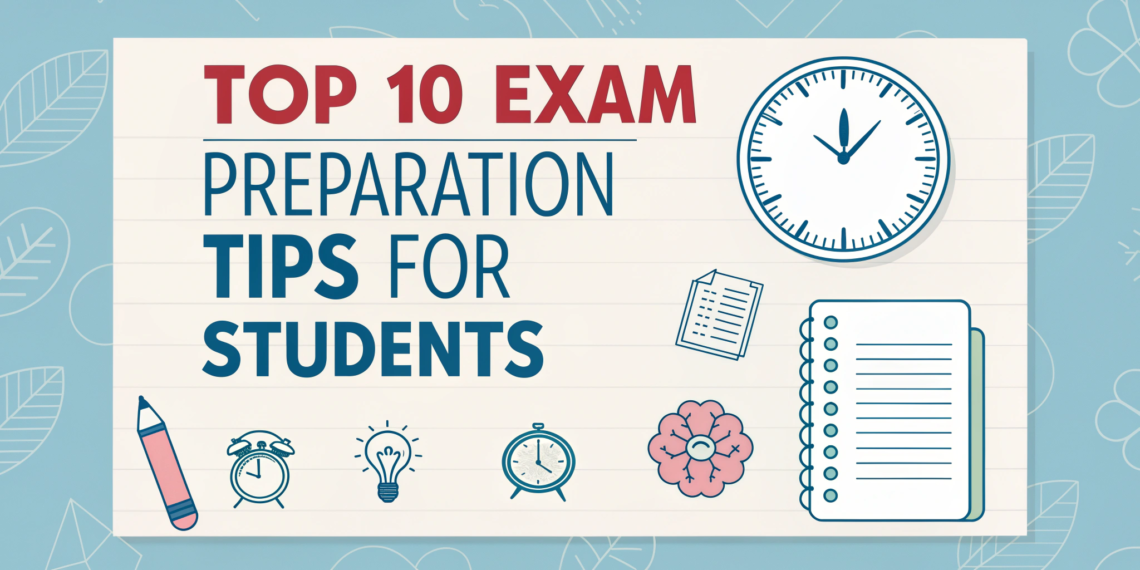
Top 10 Exam Preparation Tips for Students can help you study smarter, stay organized, and perform better in exams. Many students study for hours but still struggle because they lack proper strategies. Effective exam preparation is not just about reading more—it’s about using the right techniques, managing time, and staying consistent. These tips will help you stay focused, reduce stress, and improve your memory and performance. Whether you’re in school or college, these preparation tips will guide you toward better results.
Top 10 Tips for Effective Exam Preparation
1. Start Early
Avoid last-minute cramming. Begin preparation weeks in advance to cover the syllabus gradually.
2. Make a Study Schedule
Allocate time for each subject, include breaks, and stick to your timetable consistently.
3. Prioritize Weak Subjects
Spend more time on topics you find difficult to improve overall scores.
4. Use Active Learning Techniques
Summarize notes, create mind maps, and teach concepts to others.
5. Practice Past Papers
Solve previous exam papers to familiarize yourself with question patterns and time constraints.
6. Take Regular Breaks
Use techniques like Pomodoro (25–30 minutes study + 5-minute break) to stay focused.
7. Stay Healthy
Eat nutritious food, sleep 7–8 hours, and do light exercise to maintain energy levels.
8. Avoid Multitasking
Focus on one subject or task at a time to improve efficiency and retention.
9. Stay Positive and Confident
Maintain a positive mindset. Visualize success and believe in your preparation.
10. Revise Strategically
Use spaced repetition, highlight key points, and revise high-weightage chapters before exams.
Common Mistakes to Avoid
- Procrastinating until the last moment
- Studying without a plan
- Ignoring health and sleep
- Overloading with too many topics in one day
- Studying passively without active engagement
FAQs
Q1: How long should I study each day during exam season?
2–5 hours of focused study is ideal, depending on subjects and difficulty.
Q2: Can I study late at night effectively?
Only if you are naturally productive at night; otherwise, study during your peak focus hours.
Q3: How often should I revise before exams?
Daily revision of key topics and weekly review of all subjects is recommended.
Q4: Should I memorize everything?
Understand concepts first, then memorize formulas or facts as needed.
Q5: How do I reduce exam stress?
Take breaks, exercise, stay hydrated, sleep well, and practice relaxation techniques.
Internal Linking Suggestions
- Link to Post 10: Study Techniques That Actually Work
- Link to Post 11: How to Prepare for Exams Effectively
Image / Infographic Ideas
- Top 10 exam tips visual checklist
- Student following a study timetable
- Mind map for revision
- Healthy study habits illustration