
Introduction (100–150 Words)
https://educationicon.com/how-to-use-practice-tests-effectively-for-exam-success
Why Memorization Skills Are Important
- Helps recall information quickly during exams
- Reduces last-minute cramming and stress
- Improves confidence and accuracy
- Strengthens overall learning and understanding
- Saves time for revision of other topics
Effective Techniques to Memorize Concepts Quickly
1. Use Mnemonics
Mnemonics are powerful memory aids that make difficult concepts easier to remember. Creating acronyms, abbreviations, or rhymes helps you store information in a form your brain can retrieve quickly.
2. Visualize Information
Turning ideas into diagrams or mental images improves retention. Mind maps, charts, and visual associations help you understand and remember complex topics more easily.
3. Teach Someone Else
Explaining what you’ve learned to someone else is one of the most effective memory strategies. It forces you to simplify concepts, check your understanding, and reinforce recall.
4. Use Flashcards
Flashcards are excellent for memorizing definitions, formulas, vocabulary, and key points. Review them frequently and shuffle the order to avoid memorizing by pattern.
5. Apply Spaced Repetition
Spaced repetition strengthens long-term memory by reviewing information at increasing intervals. This prevents forgetting and ensures concepts stay fresh in your mind.
6. Break Information into Chunks
Dividing large topics into smaller, manageable parts makes studying less overwhelming. Chunking helps you absorb information gradually rather than all at once.
7. Practice Active Recall
Active recall involves testing yourself without looking at your notes. This technique strengthens neural connections and helps you identify areas that need more practice.
8. Stay Physically and Mentally Healthy
Good health directly impacts memory and focus. Proper sleep, hydration, nutrition, and regular physical activity help your brain perform at its best.
Common Mistakes That Hinder Memorization
- Reading passively without testing yourself
- Cramming all information at once
- Ignoring breaks and rest
- Relying solely on repetition without understanding
- Studying in a distracting environment
FAQs
Q1: How can I memorize formulas faster?
Use mnemonics, practice repeatedly, and visualize formulas with real examples to improve understanding.
Q2: Is active recall better than rereading notes?
Yes. Active recall strengthens memory far more effectively than passive reading or highlighting.
Q3: Can visualization really improve memory?
Absolutely. Converting concepts into images, diagrams, or mind maps makes them easier to remember.
Q4: How often should I review important topics?
Use spaced repetition: review immediately after learning, then after one day, a few days later, and again after one week.
Q5: Does exercise or sleep affect memory?
Yes. Regular exercise and sufficient sleep improve brain function, concentration, and long-term retention.
Introduction (100–150 Words)
“Learning how to memorize important concepts quickly for exams can dramatically improve your study performance and reduce stress.”
Why Memorization Skills Are Important
- Helps recall information quickly during exams
- Reduces last-minute cramming and stress
- Improves confidence and accuracy
- Strengthens overall learning and understanding
- Saves time for revision of other topics
Effective Techniques to Memorize Concepts Quickly
1. Use Mnemonics
Create acronyms, abbreviations, or rhymes to remember lists and formulas easily.
2. Visualize Information
Turn concepts into mental images or diagrams to enhance memory retention.
3. Teach Someone Else
Explaining concepts aloud reinforces understanding and improves recall.
4. Use Flashcards
Write key points, formulas, or definitions on cards and review them frequently.
5. Apply Spaced Repetition
Revisit important topics at increasing intervals to strengthen long-term memory.
6. Break Information into Chunks
Divide complex topics into smaller sections for easier memorization.
7. Practice Active Recall
Test yourself regularly without looking at notes to reinforce learning.
8. Stay Physically and Mentally Healthy
Proper sleep, hydration, and nutrition support memory and focus.
Common Mistakes That Hinder Memorization
- Reading passively without testing yourself
- Cramming all information at once
- Ignoring breaks and rest
- Relying solely on repetition without understanding
- Studying in a distracting environment
FAQs
Q1: How can I memorize formulas faster?
Use mnemonics, practice repeatedly, and visualize formulas with examples.
Q2: Is active recall better than rereading notes?
Yes, actively recalling information strengthens memory more effectively than passive reading.
Q3: Can visualization really improve memory?
Yes, turning concepts into images or diagrams makes them easier to remember.
Q4: How often should I review important topics?
Use spaced repetition: review immediately, after a day, a few days, and then a week later.
Q5: Does exercise or sleep affect memory?
Yes, adequate sleep and regular exercise improve brain function, focus, and retention.
Internal Linking Suggestions
- Link to Post 23: How to Revise Effectively Before Exams
- Link to Post 22: How to Improve Concentration While Studying for Exams
Image / Infographic Ideas
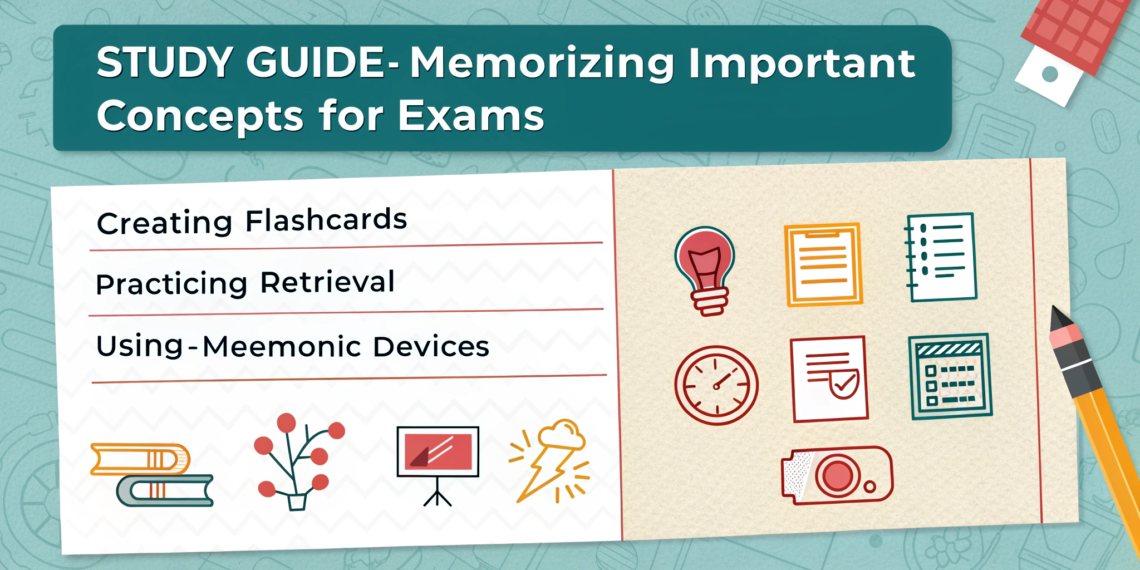
- Mnemonics and memory aid visual
- Flashcard study technique illustration