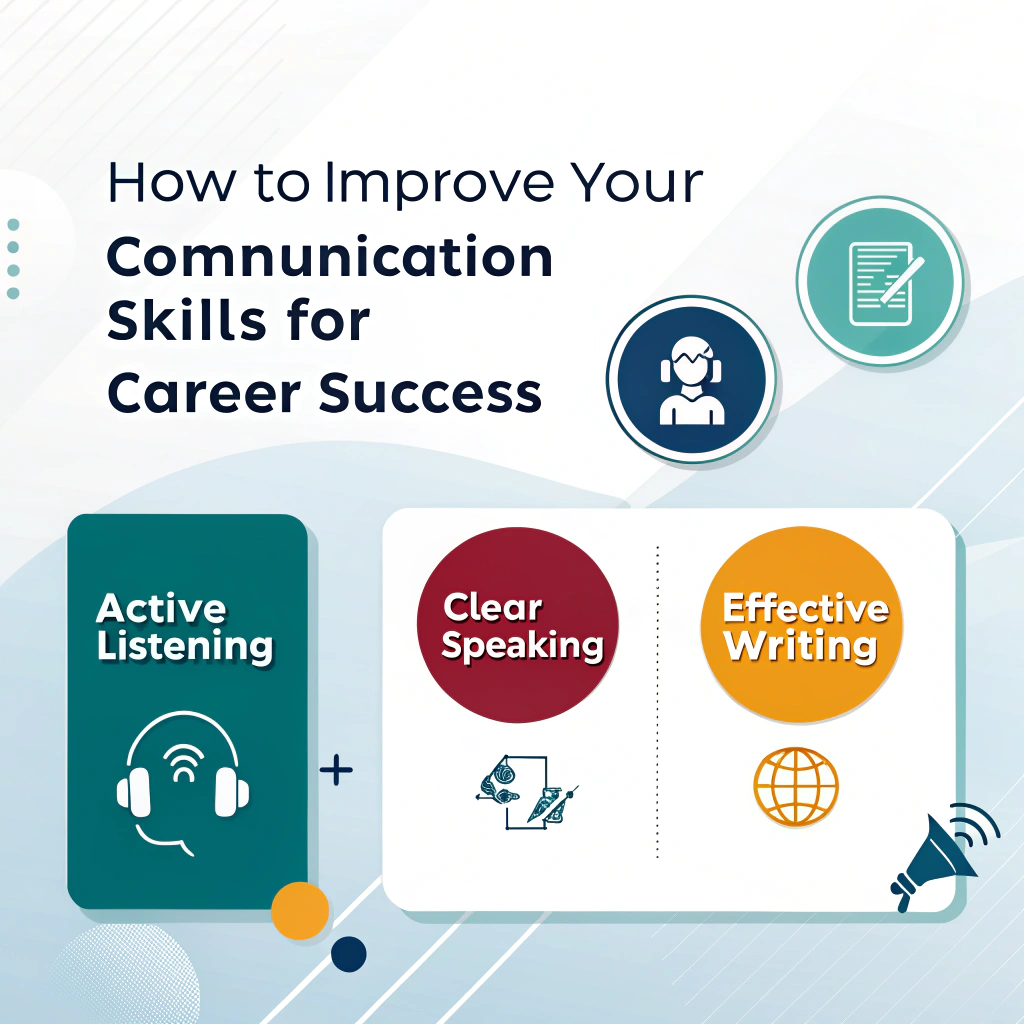

How to improve your communication skills for career success is one of the most important topics for students and professionals today. Strong communication helps you build confidence, collaborate better, and grow in any career field.
Introduction (100–150 Words)
Strong communication skills are one of the most valuable assets in any career. Whether you’re a student preparing for your first interview, a teacher interacting with parents, or a professional working in a company, your ability to communicate clearly can significantly boost your confidence, relationships, and growth opportunities. Employers today look for individuals who can express ideas effectively, listen actively, and build strong teamwork. The good news is that communication is not a natural talent — it is a skill you can learn and improve with the right methods. In this guide, you’ll discover simple and practical tips to improve your communication skills for career success, along with real-life examples, powerful habits, and common mistakes to avoid.
How to Improve Your Communication Skills for Career Success
You don’t need to add the full long keyword to every heading — just include it naturally in one or two H2/H3 headings.
Why Communication Skills Matter in Your Career
Better Job Opportunities
Companies prefer employees who can present ideas clearly, work in teams, and communicate with clients.
Stronger Professional Relationships
Good communication reduces misunderstandings and builds trust.
Increased Confidence
Speaking well makes you look more professional and capable.
Leadership Growth
Every good leader communicates confidently — meetings, presentations, and team guidance.
Types of Communication Skills You Must Master
1. Verbal Communication
How you speak, your tone, clarity, and confidence.
2. Non-Verbal Communication
Body language, eye contact, gestures, facial expressions.
3. Written Communication
Emails, messages, reports, assignments, CV writing.
4. Active Listening
Understanding others fully instead of waiting for your turn to speak.
Practical Tips to Improve Your Communication Skills
1. Practice Speaking Daily (Even for 5 Minutes)
Speak in front of a mirror, record your voice, or discuss a topic with a friend.
Small daily practice builds confidence quickly.
2. Improve Your English Vocabulary Slowly
You don’t need big words — only clear words.
Learn 3–5 new words daily and practice them in sentences.
3. Listen More Than You Speak
Active listening improves understanding and builds respect.
Example: In a workplace meeting, listen fully before sharing your idea.
4. Maintain Positive Body Language
- Stand straight
- Keep eye contact
- Smile slightly
- Avoid crossing your arms
This makes you look confident and approachable.
5. Join Communication or Public Speaking Workshops
Courses on YouTube, Coursera, or local academies help improve speaking confidence.
6. Practice Writing Professionally
Write short emails or paragraphs daily.
Focus on clarity, correctness, and polite language.
7. Use the “Think–Pause–Speak” Method
Before speaking, take 2 seconds to organize your idea.
This avoids confusion and boosts clarity.
8. Read Books, Articles, or Blogs Daily
Reading improves your vocabulary, sentence structure, and communication flow.
9. Reduce Filler Words
Avoid words like “um,” “ah,” “like,” “basically,” “actually.”
Practice speaking slowly to control fillers.
10. Ask Questions to Show Engagement
Good communication is two-way.
Example: “Do you agree?” “What do you think about this?”
Real-World Example
A student preparing for an interview practiced daily for 10 minutes in front of the mirror, reduced filler words, and improved body language. Within two weeks, they looked confident and professional, resulting in a successful job interview.
Common Mistakes to Avoid
Mistake 1: Speaking too fast
Makes you sound nervous.
Mistake 2: Not listening actively
Leads to misunderstandings.
Mistake 3: Using complicated words unnecessarily
Simple language communicates better.
Mistake 4: Poor posture and lack of eye contact
Gives a negative impression.
Mistake 5: Not preparing before meetings/interviews
Lack of preparation reduces clarity.
FAQs
Q1: How long does it take to improve communication skills?
With daily practice, improvements appear within 2–4 weeks.
Q2: Can shy people become good communicators?
Yes. Communication is a skill — not a personality trait.
w can students improve communication skills?
Reading, speaking practice, debates, and group discussions help.
Q4: What is the most important communication skill?
Active listening is the foundation of effective communication.
Q5: Does English fluency improve communication?
Yes, but clarity and confidence matter more than accent or big vocabulary.
Internal Linking Suggestions
- Link to Post 1: Top Career Skills for 2025
- Link to Post 2: How to Choose the Right Career Path
- Link to Post 3: Future-Proof Careers for the Next 10 Years
Image Ideas
- Infographic: “10 Ways to Improve Communication Skills”
- Body language diagram
- Comparison: Good vs. Poor communication
- Real-life speaking practice illustration